

How Indoor Play Supports Emotional Growth in Young Children
As a parent, you watch your child's every move — their first steps, their first words, their first friendships. You're not just looking for them to have fun; you're invested in helping them grow into confident, kind, and resilient individuals. You understand that play is their work, but in a world of endless options, how do you choose experiences that truly nurture their emotional core?
You're looking for more than just a place to burn off energy. You need a space that helps your child understand their big feelings, navigate social puzzles, and build the inner strength they'll carry for a lifetime. This guide is designed to show you exactly how a purposefully designed kids indoor playground becomes a crucial partner in that journey, transforming simple fun into foundational emotional growth.
The Emotional Landscape of Childhood Today
Fostering emotional well-being is more important than ever. Research highlights that a staggering 21% of children aged 3 to 17 have been diagnosed with a mental, emotional, or behavioral health condition. Yet, the good news is that the foundations for a healthy emotional life are built in these early years. Studies show that a child's emotional understanding is directly linked to higher prosocial behavior and fewer issues like anxiety later on.
Play is the most powerful tool we have to build this foundation. Through play, especially within Social and Emotional Learning (SEL) programs, children show significant reductions in anxiety and stress while strengthening their relationships with peers. It's not just about feeling good; it's about building the skills for a successful future. Children who develop self-regulation through play are far less likely to face challenges like grade retention or require special education services. The question isn't if play helps, but how we can create the best environment for it to happen.
Play as the Language of Emotion: Core Psychological Foundations
What looks like simple fun is actually a complex developmental process. Renowned child psychologists have shown for decades how play is the primary way children make sense of their world and their feelings. A well-designed indoor play space acts as a laboratory for this essential work.
Practicing Self-Control with Vygotsky
When children engage in pretend play — running a make-believe store or caring for a doll — they aren't just mimicking adults. They are practicing rules, taking turns, and controlling their impulses to fit a role. Psychologist Lev Vygotsky identified this as working in the "Zone of Proximal Development," where kids perform at the upper limits of their abilities. In our interactive play zones, we have kids activities where children negotiate roles and follow shared storylines, building the foundations of self-regulation without pressure.
Expressing Feelings with Piaget
For toddlers who can't yet say, "I'm frustrated," physical and sensory play is their primary language. Jean Piaget's work highlights how children use non-verbal actions to process complex emotions. Climbing a structure can be a way to conquer a fear, while building with soft blocks can be a way to exert control. A sensory-rich indoor environment provides a safe and acceptable outlet for these "big feelings" to be expressed and understood.
Building Empathy with Paley
Storytelling is central to moral development. Educator Vivian Gussin Paley observed that when children create narratives in their play, they explore concepts of fairness, friendship, and kindness. By taking on different roles in a group, a child learns to see the world from another's perspective — the very definition of empathy. This collaborative storytelling happens organically in every corner of a shared play space.
The Unique Edge of Indoor Play: Controlled Environments for Emotional Growth
While any play is beneficial, an indoor playground offers distinct advantages for nurturing emotional skills. It provides a controlled, predictable, and safe environment where children can focus on the crucial work of social and emotional learning without unnecessary distractions or risks. This is a key reason families looking for an indoor playground near me find our facility so valuable.
Safe Risk-Taking Builds Resilience
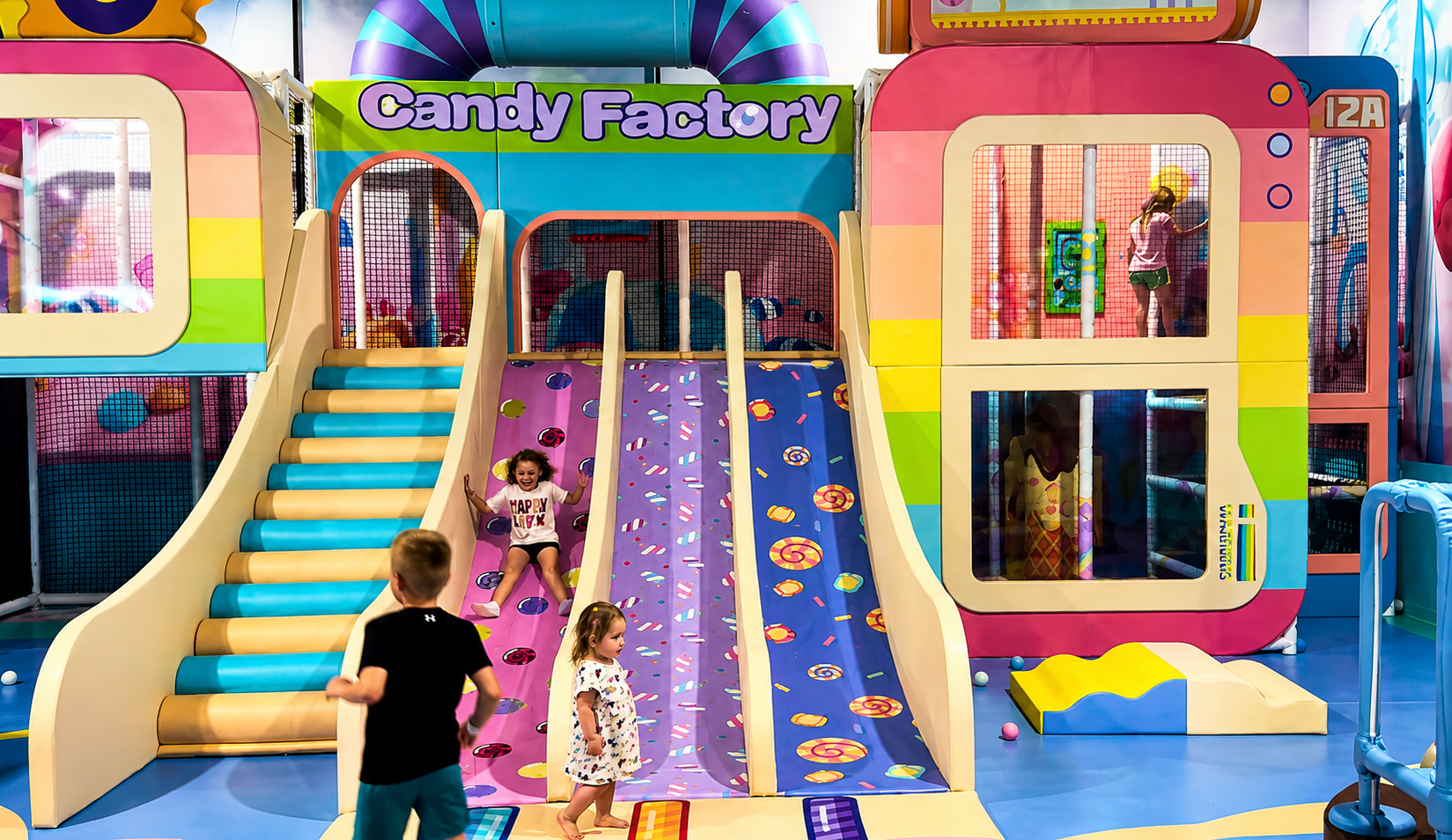
A child hesitates at the top of a tall slide. They look down, assess the challenge, and then push off, emerging at the bottom with a triumphant smile. This is "safe risk-taking." Our padded structures and soft landings allow children to test their physical and emotional limits, building courage and resilience with every attempt. They learn to manage feelings of uncertainty and experience the thrill of accomplishment, all within a setting designed to prevent serious injury.
Sensory Regulation and Focus
Outdoor environments can sometimes be overwhelming — too hot, too cold, too loud, or too unpredictable. An indoor facility offers a climate-controlled, sensory-managed space. For children who are easily overstimulated, our age-specific zones and quieter corners provide a place to decompress and self-regulate. This control allows them to engage more deeply in play, improving focus and making social interactions more successful.
Consistent Social Interaction
Friendships blossom with consistency. Unlike a public park where the crowd changes daily, a local kids play area near me like Hyper Kidz often hosts familiar faces from the community. This consistency provides a stable environment for children to practice turn-taking, sharing, and conflict resolution with peers, building lasting social skills and friendships.
How Hyper Kidz Ashburn Nurtures Emotional Intelligence Through Play
We've designed every inch of our facility with your child's holistic development in mind. For families searching for an indoor playground in Ashburn, VA, or in nearby communities like Sterling, Herndon, and Leesburg, we offer more than just play — we offer a space for growth.
Confidence and Independence
From our dedicated toddler area to the multi-level superstructures, children are empowered to make their own choices. They decide which path to take, which challenge to attempt, and how to solve the physical puzzles in front of them. Each small, successful decision builds a powerful sense of "I can do it," fostering the independence and self-belief essential for emotional well-being.
Teamwork and Empathy
Our interactive attractions and ball pits aren't just for individual fun; they are natural collaboration zones. Here, children learn to share space, invent games together, and help each other out. They learn to read social cues and understand another person's feelings, turning parallel play into cooperative play and building the empathy that forms the bedrock of strong relationships.
Joyful Celebrations and Positive Memories
Emotional health is also about creating moments of pure joy. As one of the top birthday party places near me, we provide a structured, exciting, and welcoming environment for celebrating milestones. These events are powerful opportunities for children to feel celebrated, strengthen social bonds with friends, and create positive memories that reinforce their sense of self-worth and belonging. Whether you're planning for a toddler or an older child, our birthday parties for kids near me are designed to be seamless and memorable.
Choose Meaningful Play: Experience the Hyper Kidz Ashburn Difference
Your child's emotional development is too important to be left to chance. Choosing where they play is choosing an environment that will shape their confidence, social skills, and resilience for years to come. Families across Loudoun County trust Hyper Kidz Ashburn because they see the difference — a clean, safe, and thoughtfully designed space where children aren't just playing, they're growing.
Ready to see how meaningful play can support your child's emotional journey? Plan Your Visit to Hyper Kidz Ashburn Today.
Frequently Asked Questions
Q-1: Is indoor play better than outdoor play for emotional growth?
Neither is "better" — they offer different benefits. Outdoor play is fantastic for connecting with nature and large-motor movement. However, indoor play provides a controlled, predictable environment ideal for developing specific social skills, emotional regulation, and safe risk-taking without weather constraints or the overstimulation some children experience outdoors.
Q-2: At what age do these emotional benefits begin?
Emotional development starts from birth. Even for toddlers, interacting with sensory panels, navigating soft-play structures, and engaging in parallel play alongside other children builds crucial emotional and cognitive pathways. Our dedicated toddler zone is specifically designed to support the unique developmental needs of our youngest guests.
Q-3: How does Hyper Kidz ensure a safe environment for emotional exploration?
Our commitment to safety is twofold. Physically, our equipment is meticulously maintained and designed with soft, padded surfaces. Emotionally, our staff fosters a positive and inclusive atmosphere, and our clear rules of play encourage respectful interaction. This dual focus on safety creates a space where children feel secure enough to be themselves, take chances, and grow.
Q-4: My child is shy. How can an indoor playground help them?
An indoor playground can be a perfect setting for a shy child. It allows them to observe social interactions from a safe distance before joining in. They can engage in independent play on our structures while still being in a social atmosphere. This "observe, then engage" model allows them to build confidence at their own pace, often leading to more comfortable social interactions over time.